Music NFTs: How Artists Are Reimagining Ownership & Revenue Streams
Have you heard about NFTs and their effect on music? Music NFTs are changing how artists meet fans and make money.
In 2022, the music NFT sector was valued at USD 1,746.75 million. It’s growing fast, with a CAGR of 27.92%. Forecasts suggest it will reach about US 7,653.15 million by 2028. This shows a big change in how artists and fans interact and make money.

Whether you create music or simply enjoy it, you may be curious about music NFTs and what they could change. They let fans own and trade unique digital music. This creates fresh revenue opportunities for creators and new interaction channels for supporters.
Table of Contents
Understanding Music NFTs: A Quick Guide
Music NFTs are a new mix of music and blockchain tech. They are key for artists and music lovers to get in the game.
What Are Music NFTs?
Music NFTs, or Non-Fungible Tokens, are special digital items. They show who owns a certain song or music content. They’re on a blockchain, making them rare and real.
These items can be limited editions, access passes to special stuff, or rights management tools for artists.
The Technology Behind NFTs
Music NFTs use blockchain tech. This is a system that keeps track of who owns what. It makes sure each NFT is one of a kind.
Blockchain also lets us make smart contracts. These contracts can pay royalties automatically. This way, artists get paid fairly for their work.
How Music NFTs Differ from Traditional Music
Music NFTs are different from regular music in many ways. Below is a brief summary of the key distinctions:
| Feature | Traditional Music | Music NFTs |
|---|---|---|
| Ownership | Users own a copy, not the original | Ownership is verified on the blockchain |
| Scarcity | Can be reproduced infinitely | Can be created in limited editions |
| Royalties | Often complex and delayed payments | Automated through smart contracts |
Knowing these differences helps artists and fans see how Music NFTs can change the music world.
The Rise of NFTs in the Music Industry
NFTs are changing the music world. They let artists connect with fans and make money from their work. This emerging technology is changing the way music is produced, consumed, and distributed.
Leading artists are using NFTs to their advantage. Snoop Dogg, Steve Aoki, and Grimes are making big money from them. They’re leading a wave of innovation in the music world.
Key Milestones in Music NFT Launches
The music industry’s NFT journey has seen major milestones. King Crimson was one of the first, releasing “Music Is Painted Air” as an NFT. This opened doors for many artists to explore new ways to share their music.
Some key moments include:
- Releasing unique music content as NFTs, giving fans special experiences.
- Using NFTs for ticketing and events, ensuring safe and unique access.
- Applying NFTs for revenue splits, making sure artists and collaborators get fair pay.
Notable Music NFTs That Made Headlines
Some music NFTs have grabbed big headlines. Grimes’ digital art NFT sold for over $6 million, showing NFTs’ value for artists.
| Artist | NFT Release | Notable Feature |
|---|---|---|
| Grimes | Digital Art NFT | Sold for over $6 million |
| Snoop Dogg | Exclusive Music Moments | Provided unique experiences for fans |
| Steve Aoki | Multi-sensory NFT Experiences | Combined music with visual and sensory elements |
These examples show how NFTs are opening up new ways to make money and engage fans. As NFT tech grows, we’ll see even more creative uses in music.
Artists Embracing Music NFTs
Music NFTs have changed the game for artists, giving them more control over their work. This development is especially significant for indie musicians. They can now reach their fans directly, without needing traditional industry help.
Independent Artists Leading the Charge
Independent artists are leading the way with Music NFTs. They use this tech to be more creative and earn more money. Artists can share special content like exclusive tracks and behind-the-scenes footage with their fans.
For example, artists can make limited NFTs for special experiences. Fans might get early music access or meet the artist online. This builds a stronger connection between artists and fans and opens up new ways to make money.
Case Studies of Successful NFT Projects
Many independent artists have made it big with NFTs. One artist sold out NFTs with unreleased tracks and artwork in just hours. This shows how successful NFT projects can be.
Let’s look at some numbers from successful artists:
| Artist | NFT Sales Revenue | Fan Engagement Metrics |
|---|---|---|
| Artist A | $100,000 | 50% increase in social media followers |
| Artist B | $250,000 | 200% increase in email list subscribers |
| Artist C | $500,000 | 150% increase in concert ticket sales |
Collaborations with Established Platforms
Big platforms are teaming up with artists for Music NFTs. This helps artists get their work out there and reach more people. It’s a win-win for everyone involved.
These partnerships lead to new and exciting NFT experiences. They help artists earn more and build a stronger connection with their fans. As Music NFTs grow, we’ll see even more amazing collaborations in the music world.
The Benefits of Music NFTs for Artists
Music NFTs give artists a way to make money directly, connect with fans better, and manage their rights. This new way lets artists keep control over their work. It also helps them bond with their fans more closely.
Direct Revenue Streams
One big plus of Music NFTs is that artists can make money straight from their fans. Without middlemen, artists keep more of what they earn. This makes money matters clear and fair.
Also, Music NFTs let artists sell special editions of their work. These can become more valuable over time. This can lead to more fans wanting them, which means more money for the artists.
Enhanced Fan Engagement
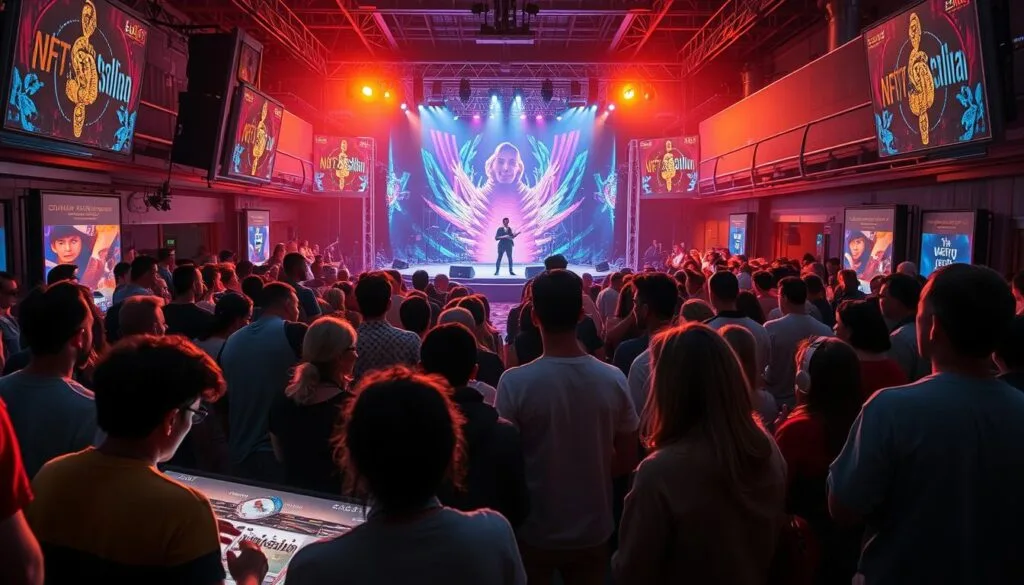
Music NFTs let artists connect with fans in new ways. They can share exclusive stuff and experiences. This could be early music, behind the scenes looks, or even virtual meet ups.
NFTs make fans feel part of the creative process. Artists get feedback and support from fans. This makes a win-win situation for everyone.
Ownership and Control Over Work
With Music NFTs, artists keep their digital work safe. Blockchain tech makes sure who owns what is clear and safe. This gives artists peace of mind, knowing their work is secure.
Artists also get to decide how their NFTs are used. They can set rules for resale. This way, they make sure they get fair pay, even when others sell their work.
Challenges Faced by Artists in the NFT Space
Artists entering the Music NFT world face many challenges. They must deal with market changes and legal issues. Knowing these challenges is key for artists to thrive.
Understanding Market Dynamics
The NFT market changes fast, with new tech and consumer tastes. Artists need to keep up with these trends. This way, they can make NFTs that people want, boosting their success.
Access passes and special experiences are important. They enable artists to grow a dedicated community of fans. For example, giving NFT holders exclusive content can make the NFTs more valuable and strengthen the bond between artist and fan.
Navigating Legal and Copyright Issues
Music NFTs raise legal questions like ownership, copyright, and fair pay. Artists must tackle these to make sure their NFTs are legal and profitable. They need to know how to split revenue fairly.
Using ticketing NFTs adds more legal hurdles. There are rules about event access and data protection. Artists must be careful to avoid legal trouble.
Using smart contracts can help. They can handle things like royalty payments automatically. This lets artists focus on creating great NFTs while dealing with less legal stress.
How Fans Benefit from Music NFTs
As a fan, you’re more than just a listener. Music NFTs let you join the music world in a new way. You can own a piece of your favorite artist’s work and enjoy its benefits.
Exclusive Content and Experiences
Music NFTs give you special access to content and experiences. You can get unique digital items like special remixes or behind the scenes videos. These exclusive items make your connection to the artist stronger and your experience more real.
Supporting Artists Directly
Music NFTs also help you support your favorite artists. When you buy NFTs, you help artists earn money directly. This way, artists get paid fairly for their work, making the music industry more just.
The benefits of music NFTs for fans can be summarized in the following table:
| Benefit | Description | Impact on Fans |
|---|---|---|
| Exclusive Content | Access to unique digital assets and experiences | Enhanced fan engagement and connection to artists |
| Direct Support | Contributing to artists’ revenue through NFT purchases | Fosters a supportive community and fair artist compensation |
| Secondary Sales | Potential for resale value and community trading | Creates a dynamic market for fan engagement and investment |
By getting into music NFTs, you make your fan experience better and help the music industry grow. As the scene gets bigger, so will the chances for fans to get involved and support artists.
Popular Music NFT Platforms
Music NFTs are gaining popularity, with platforms like Catalog, Audius, and Royal leading the way. They offer unique features and services. These platforms are revolutionizing how artists create, distribute, and earn from their music.
Overview of Top Platforms
Several platforms have become top players in the music NFT field. Here’s a concise overview of the value they offer:
- Catalog: It’s a platform for artists to mint and sell NFTs. It focuses on community and discovery.
- Audius: It’s a decentralized music streaming platform. It also supports NFT creation and trading, giving artists more control.
- Royal: It lets artists create NFTs. It offers features like rights management and ticketing, making it a full suite for music NFT projects.
These platforms are changing how we consume, create, and own music. You can check out their unique features to see how they help artists and fans.
Comparison of Features and Fees
When picking a music NFT platform, look at the features and fees. Here’s a comparison:
| Platform | Features | Fees |
|---|---|---|
| Catalog | NFT minting, community features, discovery | 2.5% transaction fee |
| Audius | Decentralized streaming, NFT creation, trading | 1% transaction fee, gas fees for NFT minting |
| Royal | Rights management, ticketing, NFT creation | 3% transaction fee, additional fees for premium services |
Knowing these differences helps you choose the right platform. Whether you’re an artist or a fan, it’s important to make an informed choice.
The Role of Blockchain in Music NFTs
Understanding blockchain technology is key to seeing the future of music NFTs. It opens up new ways for transparency and making money.
Blockchain is the core of music NFTs. It’s a framework that records and verifies ownership. This makes sure that who owns an NFT is clear and can’t be changed.
Decentralization and Transparency
Blockchain makes music NFTs different because they’re not controlled by one person. Instead, many computers worldwide keep them safe. This makes everything clear and fair.
- Decentralized networks mean less chance of censorship or tampering.
- Clear records help artists get their fair revenue splits.
- Fans can check if their NFTs are real.
Smart Contracts Explained
Smart contracts are like digital agreements that do things on their own. They’re important for music NFTs because they handle things like paying royalties and secondary sales.
Here’s how smart contracts work in music NFTs:
- An artist makes an NFT with a smart contract that says how much they get paid.
- When someone buys or sells the NFT, the smart contract makes sure the artist gets paid right.
- This way, artists get paid fairly, even when their work is sold again.
Blockchain technology changes how artists and fans connect and make money. As things keep getting better, there’s a lot of room for new ideas and growth.
Environmental Concerns Surrounding NFTs
NFTs are becoming more popular, but they raise environmental worries. As we move towards a digital world, it’s key to use green practices in digital art and collectibles.
Understanding Energy Consumption
NFTs use blockchain tech, which needs a lot of energy. This has led to worries about their carbon footprint. The energy use of NFTs depends on the blockchain they’re on.
Ethereum’s move to proof-of-stake (PoS) is a big step towards being greener. This change shows blockchain can be more eco-friendly.
Initiatives to Combat Environmental Impact
Many efforts are underway to lessen NFTs’ carbon impact. Some platforms use green energy, while others offset carbon emissions.
You can help by choosing eco-friendly platforms. Supporting artists and platforms that care about the planet makes the NFT community greener.
Key initiatives include:
- Using energy-efficient blockchains
- Implementing carbon offsetting programs
- Promoting sustainable practices within the NFT community
The NFT world is growing, and we’ll see new ways to tackle environmental issues. By being aware and making smart choices, you help make NFTs more sustainable. This supports artists in using green practices to connect with fans.
The Future of Music NFTs
The future of music NFTs is set to change how artists and fans connect. New trends and ways to make money will come as the tech grows.
Predictions and Trends
One big trend is the rise of limited editions and special content. Artists use NFTs to share unique things like behind the scenes footage or remixes. For example, an artist might release a special NFT of a song, letting fans remix it.
More artists will create interactive experiences with NFTs. This could include access passes to special events or virtual concerts. These experiences can bring artists and fans closer together and open up new ways to make money.
Potential for New Revenue Models
The future of music NFTs also means new ways for artists to make money. As tech gets better, we might see new business models. For instance, artists could start NFT based subscription services. These could offer fans exclusive content, early releases, or special insights.
Smart contracts in music NFTs could also help artists get royalties when their NFTs are sold again. This could make sure artists keep earning from their work over time. It’s a fair way for artists to make money from their creations.
Looking at these trends and new ways to make money, the future of music NFTs looks very promising. It’s exciting for both artists and fans.
Bridging the Gap Between Artists and Fans
Music NFTs are changing how artists meet their fans, building a stronger community. Artists can now connect with their audience in new and meaningful ways thanks to NFTs.
Creating Community Through NFTs
NFTs let artists share special content and experiences, bringing fans closer. This can include limited edition digital art, behind the scenes content, or virtual meet-and-greets.
By giving fans unique NFTs, artists build loyalty and a sense of belonging. Fans feel connected to the artist and each other, creating a community.
Engaging Fans in the Creation Process
Music NFTs also let artists involve fans in their work. This can happen through community-driven NFT projects or fan-voting mechanisms for future releases.
By working with fans, artists improve engagement and make sure their work connects with their audience. This teamwork leads to more impactful art.
Also, NFTs can be used for ticketing and event management. Artists can offer unique experiences like exclusive events, backstage tours, or personalized messages.
Conclusion: The Evolution of Music Ownership
The music world is changing fast with Music NFTs. They are changing how artists work and connect with fans. NFTs bring a new way to manage rights, letting artists keep control and be open about their work.
Key Takeaways
Music NFTs are bringing new ways for artists to make money. They help artists earn more from their work, without needing middlemen. This also makes sure artists get paid fairly, thanks to clear revenue splits.
Shaping the Future
NFTs are key to the music industry’s future. They could lead to new ways to make money and connect with fans. Expect a future where artists have more power over their work and fans can support their favorite artists in new ways.